

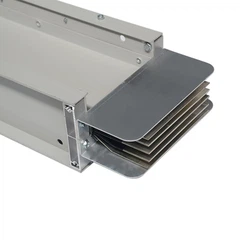
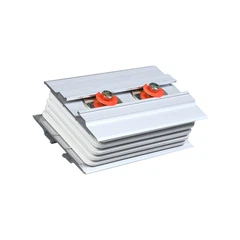
Can a busway connector be used in a high - altitude environment?
Oct 13, 2025
Leave a message
As a supplier of Busway Connectors, I often encounter various inquiries from customers, and one question that has come up frequently is whether a busway connector can be used in a high - altitude environment. In this blog, I'll delve into this topic, exploring the challenges and considerations of using busway connectors at high altitudes.
Understanding High - Altitude Environments
High - altitude environments are characterized by several factors that can significantly impact electrical equipment. The most prominent factors include lower air pressure, lower temperatures, and increased solar radiation.
At high altitudes, the air pressure decreases. According to the ideal gas law, as altitude increases, the density of air decreases. This has a direct impact on the performance of electrical equipment. Air acts as an insulator in electrical systems. With lower air density, the dielectric strength of air is reduced. Dielectric strength refers to the maximum electric field that a material can withstand without breaking down and conducting electricity. In a busway connector, this means that there is an increased risk of electrical arcing between conductors at high altitudes compared to sea - level conditions.
Temperature is another critical factor. Generally, temperatures at high altitudes are lower than at lower elevations. Cold temperatures can affect the mechanical properties of materials used in busway connectors. For example, some plastics and elastomers may become brittle in cold environments, which can lead to cracking and loss of insulation integrity. Additionally, temperature variations can cause thermal expansion and contraction of different materials within the connector, potentially leading to loosening of connections over time.
Solar radiation is also more intense at high altitudes. Ultraviolet (UV) radiation can degrade the insulation materials used in busway connectors. Over time, exposure to UV rays can cause the insulation to become brittle, crack, and lose its insulating properties.
Impact on Busway Connector Performance
Electrical Performance
The reduced dielectric strength of air at high altitudes can lead to partial discharges and arcing in busway connectors. Partial discharges are small electrical discharges that occur within the insulation material or in the air around the conductors. These discharges can gradually damage the insulation, leading to insulation failure over time. Arcing, on the other hand, is a more severe form of electrical discharge that can cause significant damage to the connector and nearby equipment, and it can also pose a safety hazard.
The electrical conductivity of conductors can also be affected by temperature changes. While copper and aluminum, which are commonly used in busway connectors, have relatively stable electrical conductivities over a wide temperature range, extreme cold can cause a slight increase in resistance. This increase in resistance can lead to higher power losses in the connector, which is not only inefficient but can also cause overheating.
Mechanical Performance
As mentioned earlier, cold temperatures can make some materials brittle. In busway connectors, this can affect the mechanical integrity of components such as insulation barriers, gaskets, and fasteners. Brittle materials are more likely to crack under mechanical stress, such as vibrations or impacts. Cracks in insulation can expose conductors, increasing the risk of electrical shock and short - circuits.
Thermal expansion and contraction can also cause mechanical problems. Different materials in the connector, such as the conductors and the insulation, have different coefficients of thermal expansion. When the temperature changes, these materials expand and contract at different rates, which can lead to stress on the connections. Over time, this stress can cause the connections to loosen, resulting in poor electrical contact and increased resistance.
Mitigation Strategies
Material Selection
To ensure the reliable operation of busway connectors in high - altitude environments, careful material selection is crucial. For insulation, materials with high resistance to cold temperatures and UV radiation should be chosen. High-Insulation Polyester Film is an excellent choice. It has good electrical insulation properties and is resistant to cold and UV degradation.
For conductors, Copper-Clad Aluminum Conductor can be considered. It combines the high conductivity of copper with the lightweight and cost - effectiveness of aluminum. Copper - clad aluminum conductors also have relatively stable electrical properties over a wide temperature range.
Design Considerations
The design of the busway connector should take into account the unique challenges of high - altitude environments. For example, the connector should be designed to minimize the risk of arcing. This can be achieved by increasing the creepage distance (the shortest distance along the surface of the insulation between two conductive parts) and the clearance distance (the shortest distance through the air between two conductive parts).
Sealing is also important to protect the connector from environmental factors such as dust, moisture, and UV radiation. A well - sealed connector can prevent the ingress of contaminants that could damage the insulation and conductors.
Testing and Certification
Before using a busway connector in a high - altitude environment, it should be thoroughly tested under simulated high - altitude conditions. This includes testing for electrical performance, mechanical integrity, and resistance to environmental factors such as cold, UV radiation, and low air pressure. Certification from recognized standards organizations can provide assurance that the connector meets the necessary requirements for high - altitude use.


Our Busway Connectors for High - Altitude Use
As a supplier of Busway Connector, we understand the challenges of high - altitude environments. Our busway connectors are designed and manufactured with these challenges in mind.
We use high - quality materials that are resistant to cold temperatures, UV radiation, and electrical stress. Our insulation materials are carefully selected to provide reliable electrical insulation even in extreme conditions. Our conductors are designed to maintain stable electrical conductivity over a wide temperature range.
In addition, our connectors undergo rigorous testing to ensure their performance in high - altitude environments. We simulate high - altitude conditions in our testing facilities, including low air pressure, cold temperatures, and intense UV radiation. This allows us to identify and address any potential issues before the connectors are deployed in the field.
Conclusion
In conclusion, while using a busway connector in a high - altitude environment presents several challenges, it is indeed possible with the right approach. By understanding the unique environmental factors at high altitudes, selecting appropriate materials, designing the connector carefully, and conducting thorough testing, we can ensure the reliable operation of busway connectors in these challenging conditions.
If you are in need of busway connectors for high - altitude applications, we invite you to contact us for further information and to discuss your specific requirements. Our team of experts is ready to assist you in finding the best solution for your project.
References
- IEEE Std 693-2018, IEEE Recommended Practice for Seismic Design of Substations.
- IEC 60068 - 2 - 1, Environmental testing - Part 2 - 1: Tests - Test A: Cold.
- IEC 60529, Degrees of protection provided by enclosures (IP Code).
Send Inquiry